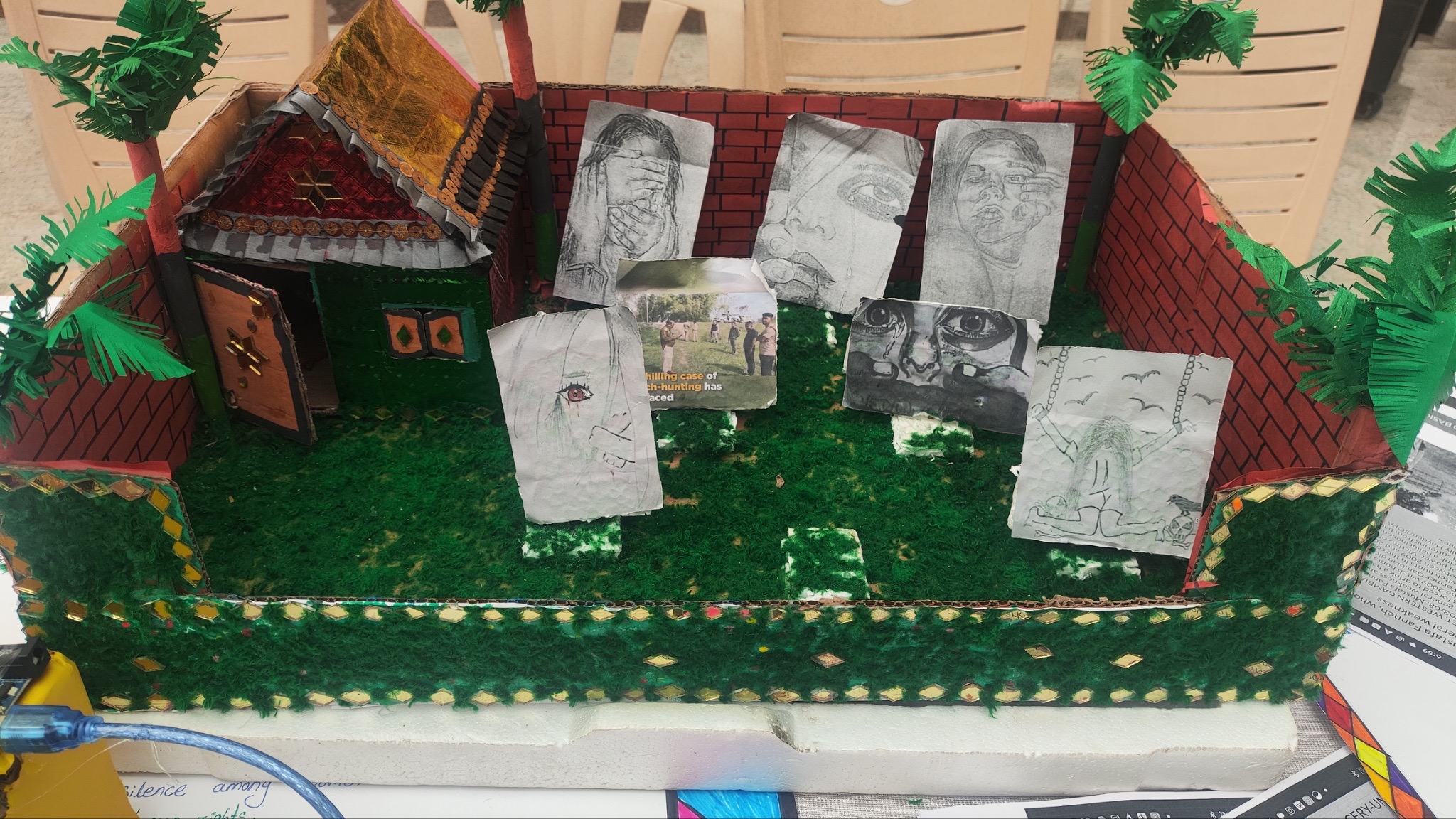
“You must have read it in the newspapers,” Satyajit Sahoo said in Odiya as he explained the prototype he was building with his friends.
In July 2025, in Bhadrak’s Juniapal village (Odisha), a man named Pratap Jana was accused of witchcraft by villagers who blamed him for mysterious illnesses and deaths. A local mob retaliated by demolishing his house and a temple he had built, where he reportedly used to perform rituals.
A simple search on the web does not throw any result on this case. A narrowed search with multiple keywords tells you this was in the local news. It was not a national story. It is not a new one either. A search with just the words “witch-hunting” and “Odisha” returns one such case almost every month, largely targeting women, violently.
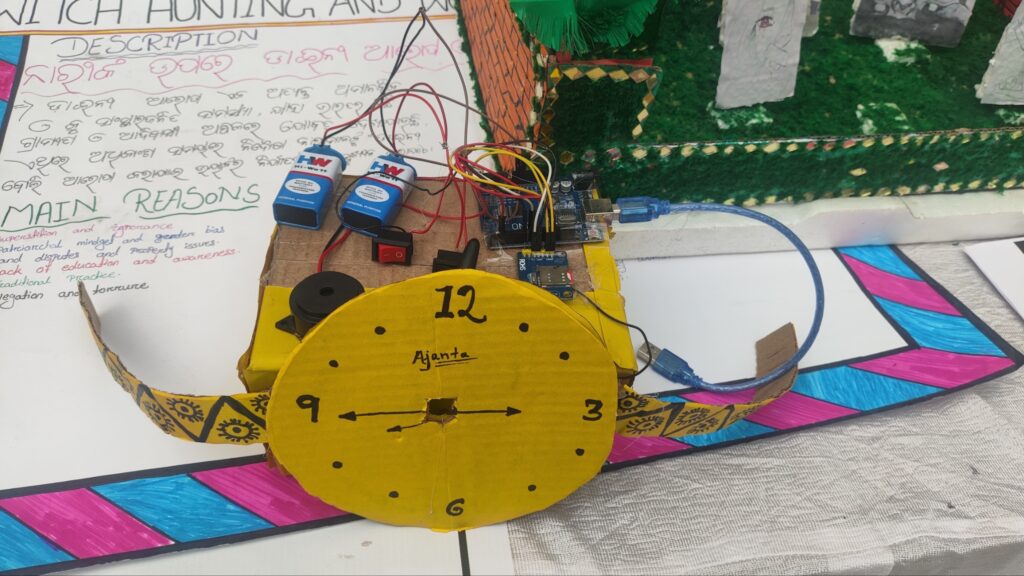
Twenty-one kilometers away from Juniapal, in a government school classroom in Alauti, Bhadrak district, Sahoo and his three classmates got together to discuss a possible solution to this, to protect the targeted women. They built a watch with GPS that can be worn by women. Pressing the button would send an alert to her trusted circles, they say, and save her in time.
Satyajit Sahoo, Rudranshu Nayak, Subijlaxmi Jena, and Bidusmita Sankhua are in tenth grade. They grew up listening to these stories the way children in this part of Odisha grow up listening to most things that happen around them – as part of everyday life, insignificant until you start paying attention.
“My mother tells me this was much more prevalent in her times and not so much today. We felt so too until we started our secondary and primary research. It still exists, very much,” said Jena.
Their research took them further than they expected. Their neighbouring district Mayurbhanj consistently records one of the highest numbers of witch-hunting cases in Odisha every year. A 2021 report jointly released by the Odisha State Commission for Women and Action Aid, based on 102 case studies, found the practice highly prevalent across 12 of the state’s 30 districts. Most victims were targeted for allegedly causing health issues or crop failure. Odisha records the second-highest number of witchcraft-related killings in India after Jharkhand. The practice is most common in communities marked by gender inequality, inadequate healthcare, and widespread illiteracy, with women, particularly Dalits and tribal communities, bearing the greatest burden.
“Despite the Act, we found that such cases continued in many districts across Odisha. Our research also showed that this practice continues in states like Jharkhand and Assam. And in countries like Papua New Guinea, Tanzania,” said Sahoo. While numbers have reduced over the years, the Odisha Prevention of Witch Hunting Act 2013 is yet to take full effect across the state.
Their school is part of Kaushali, an aspirational curriculum introduced by the Odisha government, developed collaboratively by Quest Alliance, Learning Links Foundation, and Raspberry Pi Foundation. Over the course of a year, students build computational thinking, design thinking, critical thinking, and foundational coding skills through a structured process that begins with observation. Students are asked to look at their own lives and around them, name what is broken or unfair, trace it to its root cause, and then build a solution with others. They read through research materials, conduct door-to-door surveys, meet stakeholders, study what already exists or does not exist to address the problem, before they come up with a solution.
Several hundred kilometres away, in government schools in Jharkhand’s East Singbhum district, a different but connected kind of work is underway.
Here, Quest Alliance’s social-emotional learning program works with teachers and students to build a culture of sharing, deep listening, and empathy inside classrooms. SEL sessions use storytelling, painting, and conversation to create space for students to name their emotions, understand others, and speak about what is happening in their lives.
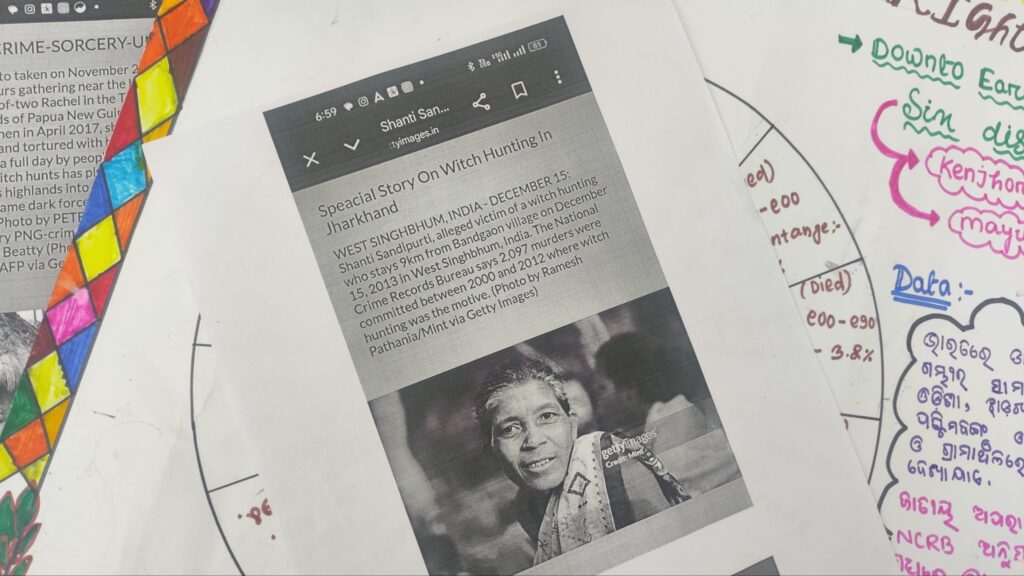
In one such session in 2024, a facilitator was discussing a story drawn from the lived experience of a witch-hunting survivor in Jharkhand, a woman who had spent years fighting the stigma of being branded a witch. After the session ended, a young girl approached and asked if she could meet the person in the story. It turned out her own grandmother was being subjected to a witch-hunt in their village.
The girl had grown up close enough to the problem to know it. The session gave her a reason and a space to say so.
This is the thread that connects what is happening in Jharkhand’s classrooms to what four students in Bhadrak built. In one place, students are being given the emotional language to name what they see around them. In another, they are being given the tools to respond to it. Both are working from the same starting point: that young people who grow up inside these realities are not passive observers. They are the ones most capable of understanding what needs to change and why.
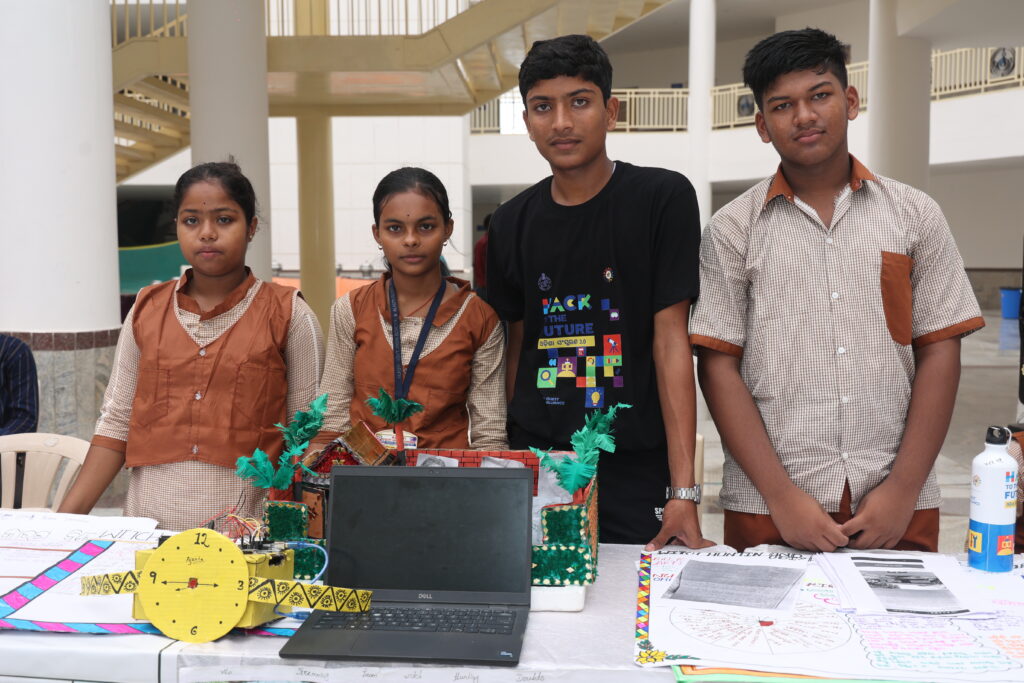
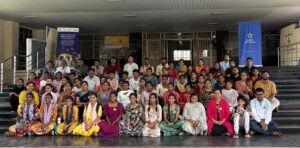
Sahoo, Nayak, Jena, and Sankhua presented their prototype at Hack to the Future 3.0, the state-level hackathon and a culminating platform of the Kaushali program, hosted at IIT Bhubaneswar in May. For students who had spent a year researching a problem their community had largely learned to live with, standing on a public stage to present a solution was its own kind of statement.
The four students are not stopping at the prototype. They are working on awareness videos and want to take both to the government. They know even their peers have little sense of how widespread the problem still is. They do not know if witch-hunting will be fully eradicated. What they know is that they have built something with potential.