Whenever Nisha closes her eyes, she imagines a world where no one suffers because they can’t afford treatment. She sees herself in a simple clinic, surrounded by people from small towns and villages, offering care without asking for money in return. In her mind, every patient she helps is a life saved, a family relieved from worry, and a step towards a kinder, fairer world.
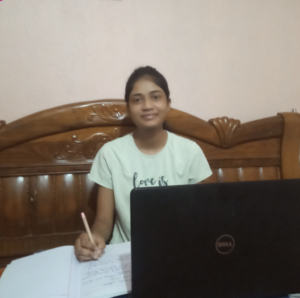
Nisha Topo hails from Lohardaga, Jharkhand. Her father serves in the Jharkhand Police Force, her mother is a homemaker, her younger brother is in Class 9, and her elder sister is pursuing a Master’s degree in Commerce. Growing up in this close-knit family, Nisha was always drawn to helping others, a value that eventually shaped her dream of becoming a doctor.
That dream became even stronger during the COVID-19 pandemic. Nisha was in the 10th standard when the world came to a standstill, a time when many students begin thinking seriously about their future. As she watched hospitals struggle with an overwhelming number of patients, she realised how desperately communities needed more doctors.
In Lohardaga, COVID-19 cases rose rapidly. Even with hospitals nearby, beds were scarce and doctors overwhelmed, leading to heartbreaking losses. Witnessing this firsthand strengthened her resolve to pursue medicine. Though the government continues to expand healthcare access, she believes people in small towns and villages still face significant barriers in accessing quality medical care.
She has seen these challenges closely.
“In some government hospitals, doctors arrive late and facilities are poorly equipped, forcing patients, especially from rural areas, to travel to city hospitals for treatment. Medicine can be financially rewarding, but it shouldn’t be pursued just for money.
If the focus isn’t on genuinely serving people, the profession risks losing its purpose and becoming unethical,” she says.
While her purpose became clearer, another experience transformed how she approached learning.
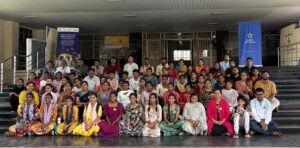
During Classes 11 and 12 at Nadiya High School, Nisha participated in the Harsh Johar curriculum. Guided by facilitators Savita ma’am, Ravi sir, and Chandrakant sir, students engaged in interactive, activity-based sessions, group discussions, storytelling, and reflective exercises that encouraged self-awareness, communication, creativity, and problem solving.
The experience changed how she saw herself as a learner.
“Before these sessions, I was nervous about approaching teachers with doubts or questions, a challenge many students face. However, the group discussions and activities helped me open up and present my ideas confidently in front of others. Gradually, my fear of public speaking disappeared. I learned that it’s okay to ask questions and that clarity is essential to learning. This newfound confidence made it easier to approach teachers and seek help whenever needed,” she recalls.
Storytelling activities encouraged students to examine real-life challenges through critical thinking and problem solving, while mindfulness exercises, such as taking deep breaths before lessons, helped improve concentration and reduce anxiety.
Harsh Johar is a teacher-led curriculum launched through a collaboration between Quest and the Government of Jharkhand as part of Project Sampoorna under the Jharkhand Education Project Council (JEPC). Built around nine life skills, it strengthens social-emotional learning, decision-making, resilience, and learner confidence.
Nisha believes many students are interested in science but are often conditioned to fear it. For her, Harsh Johar helped break those inhibitions by encouraging curiosity, confidence, and the courage to ask questions.
Science had fascinated her long before that. She especially enjoyed chemistry practicals, where experimenting with different compounds sparked her curiosity. As a first-generation learner pursuing STEM education in her family, she hopes her journey encourages more girls to pursue careers in science.
The transition from a Hindi-medium school until Class 10 to an English-medium school for higher secondary education was initially intimidating. But instead of letting the language barrier hold her back, she sought help from teachers, used online resources such as Google and YouTube to strengthen her understanding, and gradually grew more confident.
When it came time to prepare for NEET, Nisha enrolled in online coaching (through PhysicsWallah), balancing lectures, recorded classes, practice questions, and mock tests. She soon realised that consistent practice and time management were just as important as understanding concepts.
Initially, her family worried about the cost of medical education. Nisha patiently explained that government medical colleges were heavily subsidised and therefore affordable. Once convinced, her family rallied behind her, creating an environment where she could study without distractions.
“If one’s family is not supportive, it’s incredibly hard to pursue one’s goals and succeed,” she says.
The journey, however, was far from easy.
After completing Class 12, Nisha appeared for NEET for the first time but did not secure the result she had hoped for. Unwilling to put her aspirations on hold, she enrolled in a Zoology Honours programme at B.S. College, Lohardaga, while continuing to prepare for the examination.
Her second attempt, during her first year of college, also fell short. There were moments when she almost lost hope, but she refused to let setbacks define her. Instead, she continued balancing her college coursework with her preparation, determined to give herself one more chance.
When she appeared for NEET for the third time, during her second year of college, her focus shifted from worrying about the outcome to simply giving her best.
Her perseverance paid off. She secured admission to the MBBS programme at the Rajendra Institute of Medical Sciences (RIMS), Ranchi, through the 2025 NEET examination. She later left her Zoology Honours course to begin the next chapter of her medical journey and is already exploring the path ahead, learning about the NEET-PG examination and hoping to seek guidance from seniors.
With her headphones on and soft melodies playing, she sketches quietly in a corner of her room, the pencil moving with gentle focus. As she draws, her mind drifts to busy hospital wards and small village clinics filled with hopeful faces. Somewhere in those sketches is the clinic she has imagined for years, a place where no one is denied care because they cannot afford it. With every line she draws, that dream feels a little closer.